
Plenary Speakers
Bio
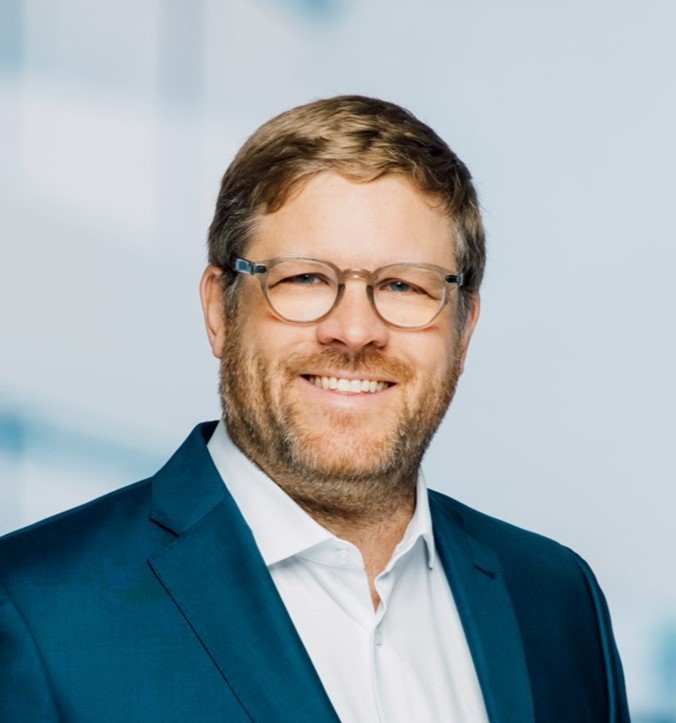
Hendrik Seidel is an executive manager in the semiconductor industry, currently driving ADAS Integrated Circuit innovation and delivery as Vice President - Head of Product Area ADAS at Bosch. With a career spanning nearly two decades, he has a strong history of leadership and achievement across major technology firms.
Prior to his current role at Bosch, Hendrik served as Vice President - Head of Project Management and Execution for Automotive SoC. He also held the position of Chief Technology Officer at Siliconally, where he led engineering transformation and optimized product development.
His experience includes significant contributions at NXP Semiconductors, where he directed program management for UWB products and served as Engineering Program Manager for Mobile Secure Elements. At Atmel Corporation, he was Director System Design, overseeing in-vehicle networking transceivers and secure car access products. Hendrik also held key product and development management roles at ZMDI (now Renesas) and co-founded Dresden Silicon GmbH, focusing on multi-processor SoC development.
Hendrik's expertise encompasses technology management, leadership, and engineering, underpinned by a Dr.-Ing. in Electrical Engineering from Technische Universität Dresden.
Title
Semiconductors for Automotive Radar and Driver Assistance
Abstract
The keynote will focus on radar‑based ADAS, emphasizing European-led development and production to ensure both technological resilience and regional value creation. The talk will trace the advancement in radar chip engineering—from early pre‑development with exploratory test chips to the first product implementations in advanced 22 nm RFCMOS. Key features of modern radar SoCs will be highlighted, including RF performance improvements, scalable architectures, sophisticated processing capabilities, and robust interference mitigation. By linking Europe’s semiconductor advances with system‑level ADAS requirements, the keynote will illustrate how foster close collaboration between research, semiconductor engineering, and product development
Opening Session Monday, 09.03.2026, Audimax I+II, 13:20
Bio
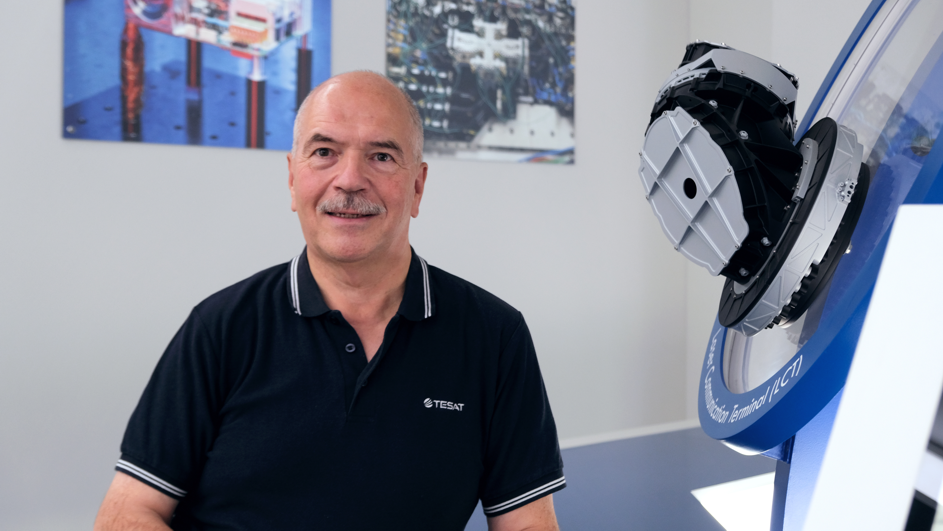
Dr. Siegbert Martin is Chief Technology Officer at Tesat-Spacecom. Tesat develops, produces and tests communications payloads for satellites, including laser communications and microwave amplifier. Dr. Martin’s career has been concentrated in terrestrial and satellite communication networks, spanning microwave and optical technologies. He has held positions at Bosch Telecom, Marconi, Ericsson, and since 2007 at Tesat-Spacecom. Dr. Martin has a PhD from Open University in Hagen, Germany.
Title
Data Networks in Space- The essential Contribution of RF Technology
Abstract
It started in 2000 with an inspiration to develop communication systems in space with laser technology between the satellite and Radio Access to the ground. Two decades later optical networks in space are becoming a substantial, resilient solution for worldwide communication, either serving as a backup solution to terrestrial data networks or as an independent extension.
This talk will highlight how Microwave Technology is an essential contribution to realizing connectivity from space to a fixed or mobile user on the ground. Concepts for active steerable space and ground antennas will be discussed, along with their requirements and challenges in design and industrialization.
The talk will conclude with a market outlook for needed microwave engineering competence for the next decade.
Opening Session Monday, 09.03.2026, Audimax I+II, 13:50
Bio
Michael Brookman is the Alpha Heating Systems lead for Proxima Fusion, Europe's fastest-growing fusion company, building fusion power plants using quasi-isodynamic (QI) stellarators. Michael completed his PhD thesis with the University of Texas at Austin on microwave-fluctuation interactions on the DIII-D tokamak. After proving a need for additional microwave power on ITER, he dedicated himself to realizing the high power RF systems needed for net-energy-gain devices. Michael led the operations of a 476 MHz antenna on the DIII-D tokamak for General Atomics; the final design of a 120MHz ion cyclotron heating system for the SPARC tokamak, and drilling for geothermal energy with Quaise. He joined Proxima in Munich in June 2025, where he is leading the design and development of Proxima’s net energy stellarator collaborating with IPP, KIT, University of Stuttgart, UKAEA, and F4E.
Title
Microwave Heating on the Alpha Q>1 Stellarator
Abstract

Bio
Mohand Achouche is a strategic advisor on devices / 6G and high speed business relationship within Nokia Bell Labs since 2019. From 2015 to 2019, he was the managing director of III-V Lab a JV between Nokia, Thales and CEA. He contributed to the creation of various III-V Lab’s spin-offs and leaded multiple industrial transfers.
Mohand received his PhD degree in material science from Paris VII University in 1996. His research activities started at Orange lab in 1993 on Photonic Integrated Circuits for optical communications. During 1997-2000, he was with Ferdinand Braun Institute (Berlin) working on electronic power amplifiers for mobile communications. He joined Alcatel (now Nokia) in 2000 working on various research projects and had many different managerial roles.
Title
Next Generation Networks: A critical interdependence of chips and connectivity
Abstract
Data communication demand is accelerating with AI, cloud, and HPC, driving unprecedented growth in datacenter interconnect (DCI) traffic, cellular and satellite communication links. Differentiation now hinges on devices, packaging, and integration spanning front-end module radio for 6G, pluggables (beyond 800G), co‑packaged optics (CPO), DSP, ADC/DACs and advanced cooling. We present recent innovations in analog front‑end (AFE) devices and their integration that enable next‑generation coherent systems targeting single‑wavelength capacities > 3 Tb/s at extreme symbol rates (> 260 GBd) and high capacity wireless connectivity for 6G.
Closing session Wednesday, 11.03.2026, Audimax I+II, 13:50